Traceroutes
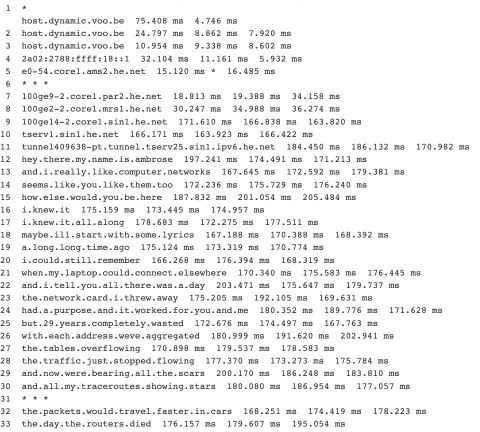
A predictable traceroute path uses PTR records on its routers to spell lines from “American Pie”, turning reverse DNS into a lyric display.
Read moreDNS Museum · 49 entries
A reference for the odd, inventive, and always impractical things people have done with DNS.
Traceroutes
A predictable traceroute path uses PTR records on its routers to spell lines from “American Pie”, turning reverse DNS into a lyric display.
Read moreTraceroutes

A traceroute to bad.horse spells lyrics through reverse-DNS names; signed.bad.horse adds a separate Easter egg in its TLS certificate chain.
Read moreTraceroutes
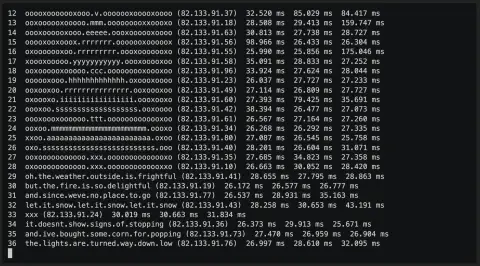
A static traceroute uses reverse-DNS names to reveal a Christmas tree, with each hop adding another branch to the seasonal picture.
Read moreTraceroutes
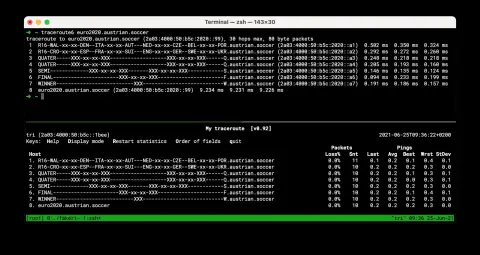
A traceroute display used live Euro 2020 scores, pairing a controlled route with DNS names to turn network diagnostics into a changing scoreboard.
Read moreTraceroutes
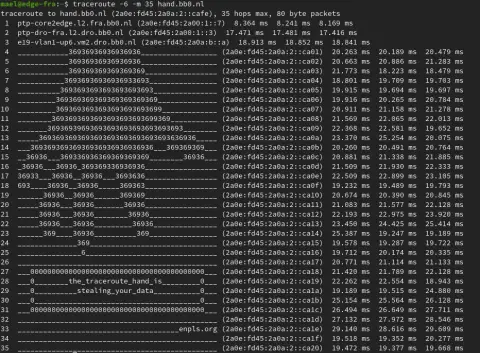
An IPv6 traceroute uses reverse-DNS names to draw a hand; raising the hop limit reveals more of the picture one numbered hop at a time.
Read moreTraceroutes
A traceroute spells out lyrics from “Let It Snow” in the reverse-DNS names returned for each hop.
Read moreTraceroutes

A predictable static route sends probes through selected IP addresses whose PTR records spell a Star Wars story in ordinary traceroute output.
Read moreDNS over...

DONUTS expands to “DNS over normal, unencrypted TCP streams”: a deliberately literal reminder that DNS can run over a simple stream transport.
Read moreDNS over...
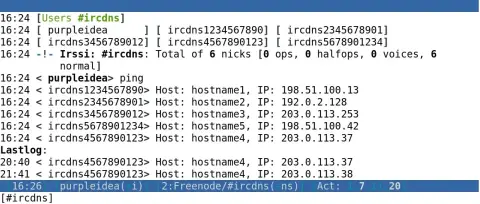
An IRC channel carries dynamic DNS update requests; the published answers still come from DNS, while chat serves as the separate change path.
Read moreDNS over...
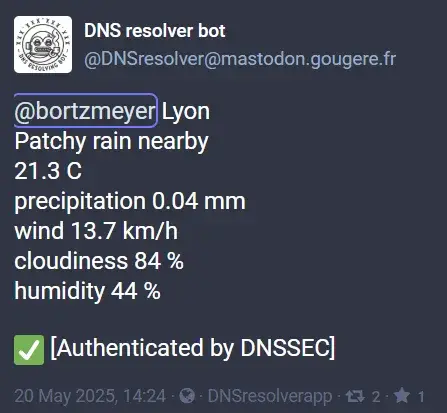
A Mastodon-linked resolver experiment combines federated social messaging with DNS queries and DNSSEC-based authentication.
Read moreDNS over...

DialDNS lets a caller ask a recursive resolver questions by telephone, turning spoken interaction into a novel DNS client interface.
Read moreDNS over...
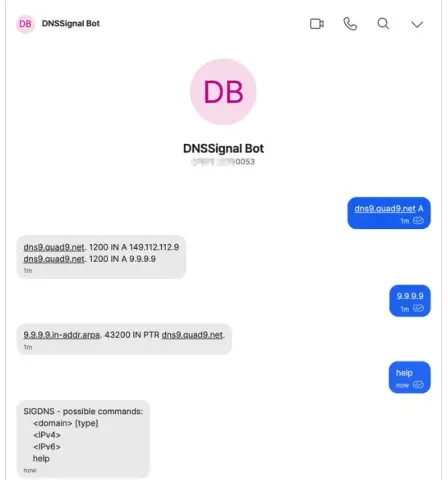
A Signal conversation presents DNS questions and answers as secure messages, exposing the resolver exchange through a familiar chat interface.
Read moreDNS over...

SMS carries a compact representation of DNS questions and replies, demonstrating a constrained alternative to the usual UDP or TCP exchange.
Read moreDNS over...
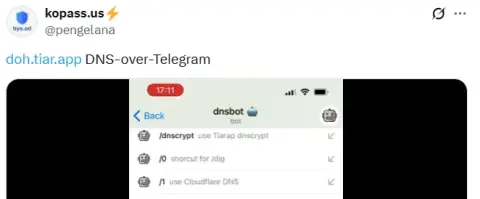
A Telegram bot accepts a DNS question in chat and returns the resolver’s answer as a message, placing lookup behind a messaging interface.
Read moreDNS over...

A short-lived social account accepted DNS lookup requests and posted answers, using a platform API as the client interface.
Read moreDNS over...
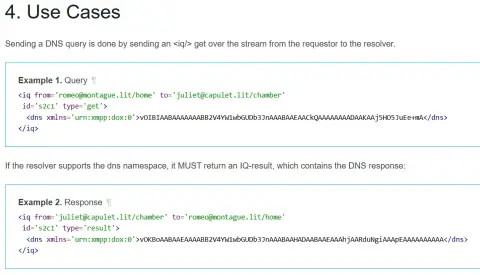
XEP-0418 describes how XMPP can carry DNS requests and responses, bringing resolver lookups into a formal messaging extension.
Read moreDNS over...
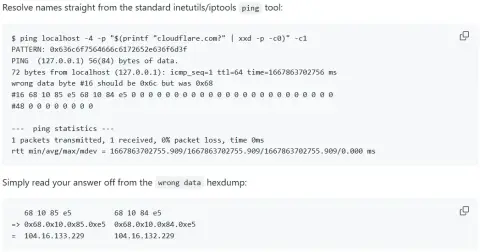
This project recasts a ping-style diagnostic as DNS exchanges, exploring how a familiar reachability check changes when a resolver is the path.
Read moreTools and toys
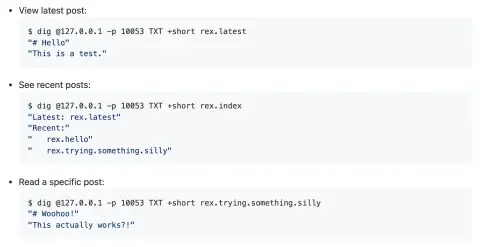
txtrex stores blog posts in TXT records: query one name to list posts and another to retrieve a post, making publishing possible with DNS alone.
Read moreTools and toys
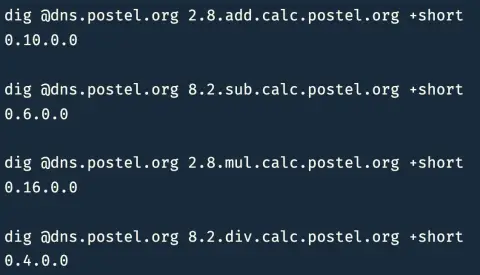
A Reverse Polish calculator accepts operands in a DNS name and returns a dynamically computed answer, a small service you can query with dig.
Read moreTools and toys

A carefully formed DNS query retrieves a geocaching clue in TXT data, turning the resolver into a lightweight interface for a field game.
Read moreTools and toys
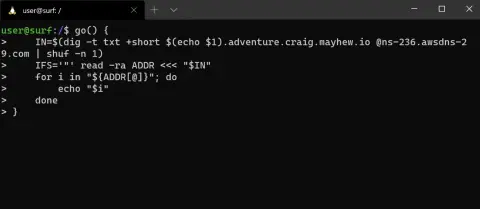
Players issue DNS queries as game actions and read story text in the answers; round-robin responses can add chance to the adventure.
Read moreTools and toys
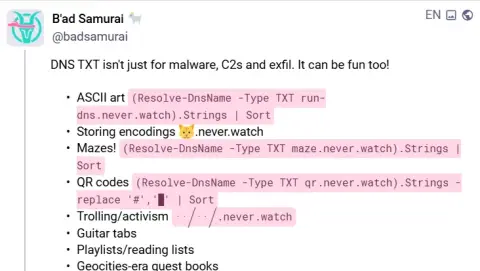
These TXT-record experiments return ASCII art, mazes, QR codes, music, and games, showing how one textual answer format can support many toys.
Read moreTools and toys

The Drink DNS server returns current or next-day weather in TXT answers; encode a city and time in the queried name to retrieve the report.
Read moreTools and toys
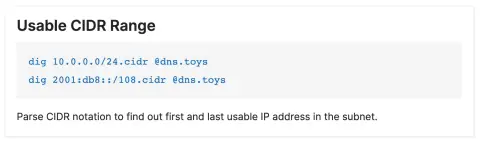
dns.toys exposes small utilities through crafted DNS names, including currency conversion, world time, IP echo, number-to-words, and a usable slider range.
Read moreTools and toys

Drink is Stéphane Bortzmeyer’s experimental authoritative DNS server: query different names and record types for dynamic answers such as greetings, client addresses, and diagnostics.
Read moreTools and toys

This comic imagines Google focusing on its 8.8.8.8 public resolver, a cultural snapshot of how visible public DNS became.
Read moreTools and toys

A web client retrieves page content from DNS answers while a conventional server supplies the surrounding page, blurring lookup and content delivery.
Read moreTools and toys

Team Cymru maps an IP address to its autonomous system number through a structured DNS query, giving network operators a scriptable routing lookup.
Read moreTools and toys

A DNS LOC record publishes geographic coordinates for the International Space Station, making a rarely used record type answer a live question.
Read moreTools and toys

A resolver query reports the client address visible to the DNS service, which can differ from the address configured on the device.
Read moreTools and toys

A DNS query triggers a Wikipedia lookup and returns the result in an answer, using DNS as a text retrieval path for clients with limited connectivity.
Read moreTools and toys
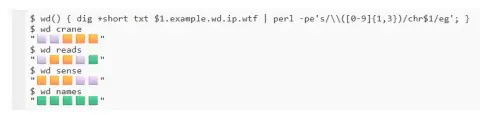
Each DNS query submits a Wordle-style guess and the answer reports game state, expressing an interactive loop in short DNS messages.
Read moreTunnelling
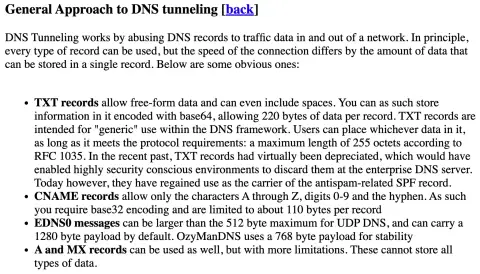
DNS tunnelling encodes data in query names and answers to create a constrained communications channel, a pattern with both legitimate and harmful uses.
Read moreTunnelling
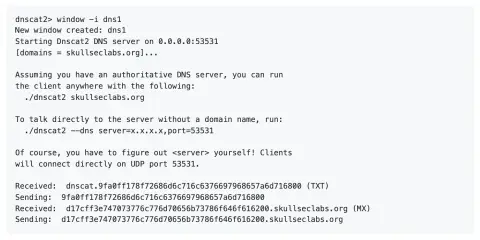
dnscat2 carries a full TCP/IP session through DNS and supports interactive traffic such as files and messages; its DNS-like appearance makes monitoring important.
Read moreTunnelling
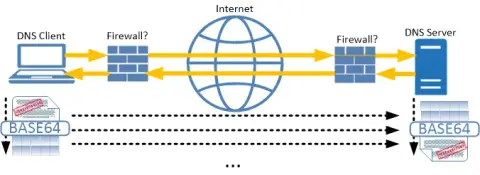
FToDNS adapts file-transfer exchanges to DNS queries and answers, splitting data across a transport with strict size and timing limits.
Read moreTunnelling
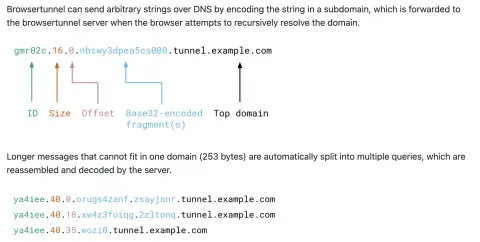
A browser tunnel encodes arbitrary request strings in DNS subdomain labels and reconstructs them at the far end, showing the overhead of HTTP over DNS.
Read moreTunnelling
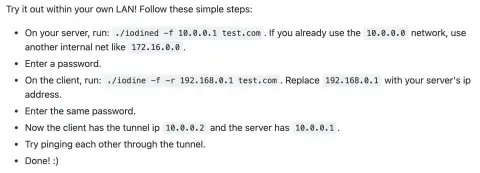
iodine builds an IP tunnel between two endpoints over DNS, so other IP traffic can use the link, with low throughput and DNS-shaped constraints.
Read moreTunnelling
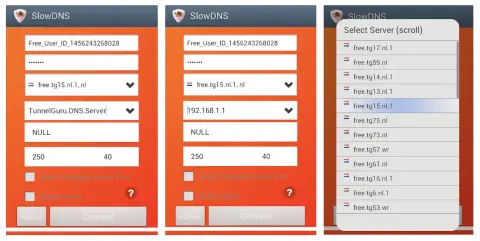
The Android app SlowDNS presents a VPN carried over DNS, an inventive option for networks that allow DNS but restrict other traffic.
Read moreOther things

An experimental chatbot accepts conversational requests as DNS lookups, trading a familiar interface for DNS-sized questions and answers.
Read moreOther things

BIMI uses DNS records to point mail systems to brand logos; the talk notes that DMARC must be configured before the logo display can be used.
Read moreOther things

CatDNS is an intentionally playful authoritative DNS server: ask it for a name and it answers with a cat-themed result.
Read moreOther things

A Route 53 proposal puts machine configuration in DNS records, using lookups in place of tools such as Puppet, Ansible, or Chef.
Read moreOther things
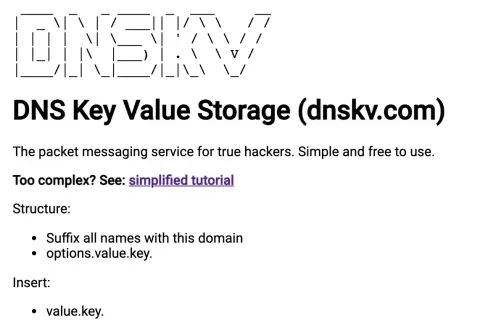
DNSKV is a generic public key-value service: names identify keys and DNS answers return values, backed by caches distributed across recursive resolvers.
Read moreOther things
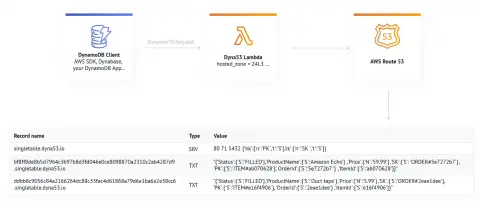
A NoSQL experiment treats names in a DNS zone as hierarchical keys and their records as values, while inheriting DNS caching and update semantics.
Read moreOther things
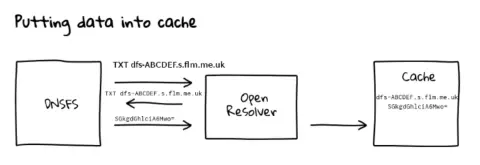
DNSFS layers filesystem operations over DNS and resolver caches; its author demonstrated the design by streaming an MP3 through the DNS-backed filesystem.
Read moreOther things
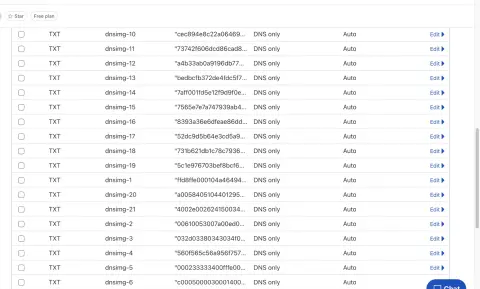
This experiment divides image data into DNS-sized fragments and reassembles them at the client, stretching a lookup protocol into bulk transfer.
Read moreOther things
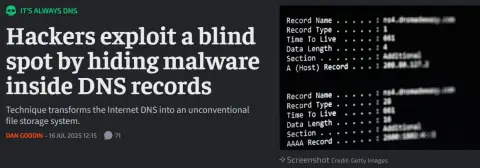
Malware can hide payload data in DNS record content when downstream tools trust or mishandle answers; this is a defensive case study.
Read moreOther things
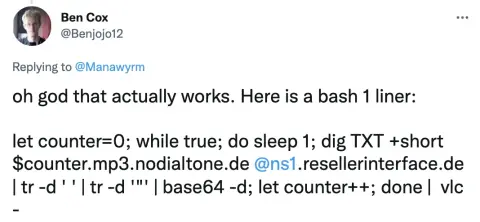
A shell pipeline requests encoded audio fragments through DNS, rebuilds the bytes, and plays them: an intentionally inefficient media transport.
Read moreOther things
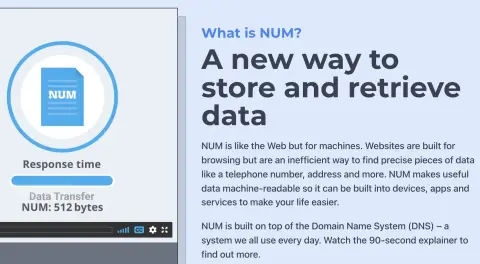
NUM built a DNS data protocol with an SDK and npm modules; its Yellow Pages example retrieves structured company contacts through public resolver infrastructure.
Read more